Mastering Tracing Sentence Writing Worksheets: A Creative Guide
When you think about the building blocks of design and education, clarity often trumps complexity. For those of us working in publishing, content creation, or even homeschooling, the challenge is finding materials that bridge the gap between learning and professional presentation. This is exactly where the Tracing Sentence Writing Worksheets come into play. It isn't just a set of pages for a first grader; it is a comprehensive resource designed to establish foundational writing skills with a level of polish that respects the user's time and intelligence. Whether you are a publisher creating educational content or a parent guiding a child’s literacy journey, understanding the utility of this specific volume is key.
The Anatomy of a Practical Design Asset
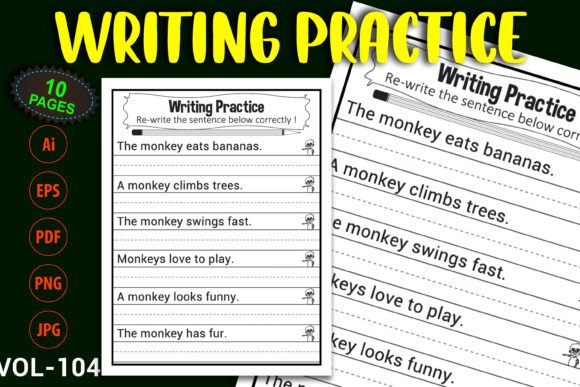
Let’s get specific about what makes this resource stand out. This isn't a hastily thrown-together collection of lines. The Sentence writing worksheet (Vol-99) is structured with precision. You are getting 10 pages containing 60 distinct sentences, tailored specifically for first graders. The visual design is intentionally minimalist, rendered in black and white. This is a crucial design choice. In the world of print production and publishing, color complexity can drive up costs and distract from the core task. By keeping the palette monochromatic, the focus remains entirely on the letterforms and the physical act of tracing.
The dimensions are set at the industry-standard 8.5 x 11 inches, with a No Bleed setting. For the designers and self-publishers reading this, you know exactly how important that is. It means you can print these sheets at home or through a standard office printer without worrying about content getting cut off at the edges. It’s a small detail, but it’s the kind of professional foresight that separates a usable asset from a frustrating one. The design is clean, offering enough white space to prevent the page from feeling cluttered, which is essential for young learners who can easily feel overwhelmed by visual noise.
Beyond the Classroom: Real-World Applications
While the primary audience is 1st-grade students, the applications for this worksheet extend much further, particularly for those of us in creative industries. Consider the handwritten font style often used in these tracing exercises. It mimics the natural flow of handwriting, which is a massive trend in modern typography. If you are a content creator or marketer, you can use these sheets to create authentic-looking background textures for social media graphics. Imagine a "quote of the day" post with a traced sentence visible in the background—it adds a layer of human touch and authenticity that digital perfection often lacks.
Furthermore, for crafters and hobbyists, the inclusion of 10 PNG and 10 JPEG files in high quality is a significant value add. These aren't just static printables; they are digital assets. You can overlay these tracing lines onto other designs, use them in scrapbooking, or integrate them into digital planners. The fact that the package includes editable AI and EPS files opens the door for graphic designers to manipulate the vector paths. You could, theoretically, take the sentence structure and adapt it for a custom logo design or a specific piece of packaging design that requires a "homework" aesthetic.
Typography and Readability: The Silent Influencers
In the context of educational design, readability is the king. The Tracing Sentence Writing Worksheets prioritize this above all else. When we talk about typeface selection in education, we are looking for high legibility. The letterforms in this volume are designed to be distinct, helping young eyes differentiate between similar characters. This focus on visual hierarchy—where the traced example is clear and the practice line is inviting—is fundamental to building writing confidence.
For those involved in brand identity or editorial design, this resource serves as a reminder of the power of simplicity. We often get caught up in complex serif font pairings or decorative script font styles, but sometimes, the most effective communication comes from a clean, sans-serif approach. Using these worksheets can help you test how simple type treatments hold up in print. It’s a low-stakes way to observe how ink sits on paper and how line weight affects the reading experience.
Practical Guidance for Professionals and Parents
Integrating this resource into your workflow or your child’s routine requires a strategy. First, acknowledge the versatility of the file formats. As a small business owner or entrepreneur, having access to a 100% editable file means you aren't locked into the original content. You can customize the sentences to fit a specific curriculum or a marketing campaign theme. If you are a teacher, you can modify the content to reinforce specific vocabulary words relevant to your current lesson plan.
However, a word of practical advice: the package comes as a ZIP file. Ensure you have the necessary software to decompress the archive before you begin. It’s a standard delivery method for design assets, but it’s always better to check compatibility upfront. When printing, I recommend using a heavier paper stock if you intend to use markers or wet ink, as standard copy paper can sometimes lead to bleed-through, even with a monochrome design.
Finally, think about the long-term value. This is Vol-99, suggesting a massive library of similar resources. For bloggers or publishers looking for consistent content, tapping into a series like this ensures visual consistency across multiple volumes. It creates a cohesive look for a workbook series or a branded educational product line. The Tracing Sentence Writing Worksheets are more than just practice sheets; they are a versatile tool for anyone who values the intersection of education and thoughtful design.