ABC Alphabet Coloring Pages for Kids: Beyond the Crayon Box
When we talk about design assets that bridge the gap between education and visual appeal, few items are as universally effective as ABC Alphabet Coloring Pages for Kids. For professionals in the creative space—whether you are an educator, a children’s book author, or a designer specializing in youth branding—understanding the mechanics of these pages is crucial. This isn't just about filling time with crayons; it is about providing a structured framework for early literacy that balances visual simplicity with cognitive engagement. The "font" of a coloring page, if we can call the linework that, must be bold, clear, and accessible. It needs to hold a child's attention while teaching them the fundamental architecture of the alphabet.
The Anatomy of Educational Design
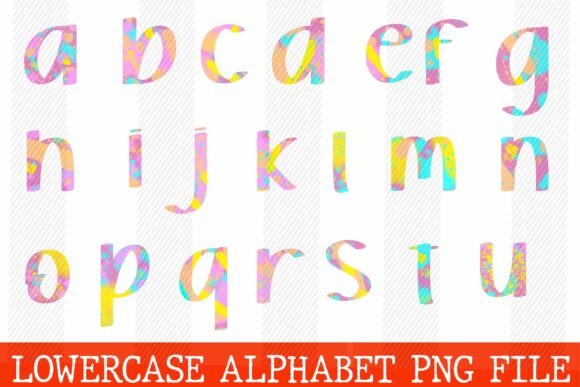
From a design perspective, the effectiveness of ABC Alphabet Coloring Pages for Kids lies in its adherence to specific visual rules. Unlike complex display fonts used in adult branding, the letterforms in these educational sheets are stripped of unnecessary serifs or flourishes. They function much like a sans serif font in the world of typography—highly legible, clean, and functional. However, unlike a sterile digital interface, these pages are paired with high-contrast illustrations. This pairing creates a visual hierarchy where the letter is the primary anchor, and the image provides the mnemonic context. For a graphic designer or publisher, this is a masterclass in layout: the negative space is generous enough to accommodate the unrefined motor skills of a toddler, ensuring the child stays within the lines without frustration.
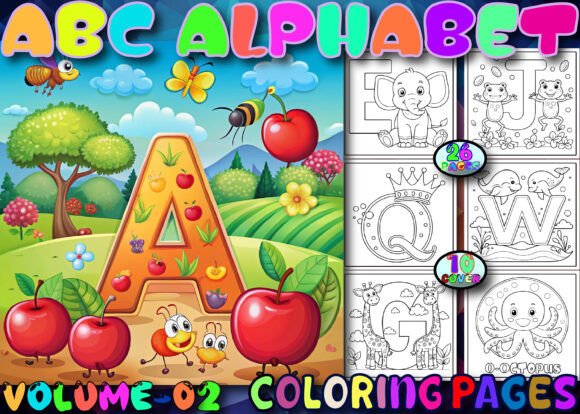
The "personality" of these pages is inherently friendly and approachable. When you look at Volume 2 of the ABC Alphabet Coloring Pages for Kids, you see a refinement of this style. The illustrations move beyond basic shapes to slightly more complex objects and animals, catering to a growing attention span. For marketers and content creators in the education niche, this represents a scalable asset. It is not merely a static image; it is a tool that facilitates interaction. The "brand perception" here is one of trust and developmental value. Parents and educators are looking for resources that feel safe and stimulating, and the clean line art style delivers exactly that professional, educational aesthetic.
Practical Applications for Creative Professionals
How does a resource like ABC Alphabet Coloring Pages for Kids fit into the workflow of a modern entrepreneur or designer? The applications are surprisingly versatile. For those involved in packaging design for children's products, these pages offer a reference point for character styling and letter integration. If you are designing a logo design for a daycare or a toy brand, the visual language of these coloring pages—rounded edges, thick strokes, and friendly proportions—provides a solid foundation for brand identity.
Furthermore, for bloggers and web design specialists focusing on family or parenting content, these assets are invaluable for lead generation. Offering a high-resolution printable as a free download is a proven strategy to build an email list. The ABC Alphabet Coloring Pages for Kids serve as perfect digital assets for this purpose because they offer immediate, tangible value. In the realm of social media graphics, the bold, black-and-white nature of the line art makes for high-engagement content. It invites participation from the audience, turning passive scrolling into an interactive activity for their children.
Visual Hierarchy and Readability
In typography and design, we often discuss readability and visual hierarchy. With ABC Alphabet Coloring Pages for Kids, these concepts are applied in their most fundamental form. The letter must be the dominant element, often sized larger than the accompanying illustration to ensure the primary educational goal is met. This is similar to how a headline font works in editorial design; it commands attention first. The accompanying illustrations act as supporting copy, providing context without competing for dominance.
For crafters and hobbyists, the single-sided printing of these pages is a critical design detail. It solves the issue of bleed-through, which is a common frustration with markers and wet media. This attention to the physical usability of the product elevates it from a simple download to a premium creative asset. Whether you are using these for a homeschool curriculum or a professional printing project, the quality of the resolution matters. High-resolution ABC Alphabet Coloring Pages ensure that the lines remain crisp even when scaled, which is essential for maintaining the professional integrity of any printed material.
Strategic Implementation in Branding and Education
For small business owners in the educational sector, consistency is key. Using a cohesive set like ABC Alphabet Coloring Pages for Kids ensures that the visual style remains uniform across different learning modules. This consistency builds trust with the end-user. In a market saturated with generic clipart, a curated set of coloring pages that follows a specific style guide—consistent line weight, consistent character design—stands out as a premium font or asset would in a corporate setting.
Consider the font pairing analogy. Just as you would pair a script font with a sans serif for contrast, these coloring pages pair the rigid structure of the alphabet with the organic, playful nature of the illustrations. This duality is what makes them engaging. They teach structure (the letter) while encouraging creativity (the coloring). For marketers, this is a powerful emotional hook. You are selling not just a page, but a moment of focused, creative connection between a parent and a child.
Conclusion: A Versatile Asset for Modern Creators
Ultimately, ABC Alphabet Coloring Pages for Kids are more than just educational tools; they are a versatile design resource. They embody the principles of modern typography adapted for a specific, developmental audience. Whether you are a publisher looking for content, a designer seeking inspiration for youth-oriented projects, or an educator building a curriculum, these pages provide a reliable, high-quality foundation. By focusing on clean lines, logical layout, and high engagement, they serve as a bridge between early learning and visual literacy.