🏅 Sports Coloring Book for Kids: A Playful Activity for Young Athletes
More Than Just Coloring: Building Foundations
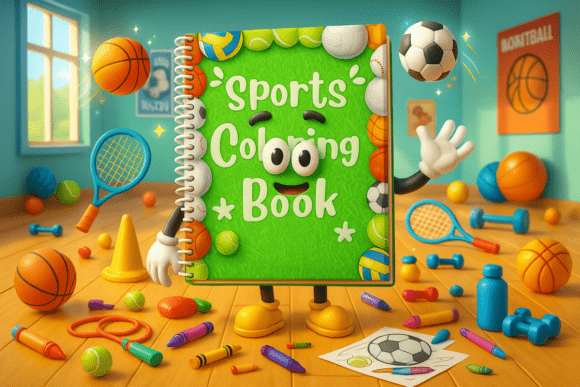
As creators, we often look for assets that deliver more than surface-level appeal. The 🏅 Sports Coloring Book for Kids is a prime example. On the surface, it’s a collection of 52 printable activity pages featuring sports like soccer, basketball, and martial arts. But its real value lies in its intentional design for developmental growth. The illustrations are intentionally simple and bold, with clear outlines and minimal intricate detail. This isn’t just an aesthetic choice; it’s a practical one. For young children ages 3 to 8, these uncomplicated forms are easier to color within, which directly supports the refinement of fine motor skills and hand-eye coordination. The personality of the book is energetic and encouraging, using diverse, kid-friendly athlete characters to make every child feel included and inspired. The overall appeal is one of accessible, wholesome fun that subtly builds foundational skills.
From a design perspective, the style is classic and functional. It avoids overly trendy or complex graphics in favor of timeless, recognizable imagery. A basketball, a tennis racket, a medal—these are universal symbols that immediately communicate the theme without confusion. This clarity is crucial for its target audience. The visual hierarchy within each page is well-considered, with the main subject taking center stage, surrounded by ample white space. This prevents young artists from feeling overwhelmed and helps them focus on the task at hand. The inclusion of a “My Name Is” personalization page is a thoughtful touch that transforms the book from a generic product into a personal keepsake, fostering a sense of ownership and pride in the activity.
Practical Applications for Educators, Parents, and Small Businesses
The utility of this printable coloring book extends far beyond a rainy-day activity. For preschool and early elementary educators, it’s a ready-made resource for thematic units on sports, health, and community helpers. It can be integrated into lesson plans to introduce basic sports vocabulary—the difference between a court and a field, the names of various equipment. For parents, it’s a screen-free tool that encourages imaginative play and can be a conversation starter about teamwork, perseverance, and trying new things. The instant digital download format is particularly valuable for small business owners in the childcare, tutoring, or party planning sectors. A children’s gym or a birthday party entertainer could offer these pages as a complementary activity, adding value to their service without significant overhead.
Considering its place in the broader market of design assets, this product occupies a specific and useful niche. It’s not a premium font or a complex illustration kit, but a focused, high-utility resource. Its strength is its simplicity and direct purpose. For a blogger or content creator focusing on parenting, education, or family activities, this book represents excellent commercial font and asset ethics—it’s clear about its terms (personal use only), provides a defined deliverable, and solves a specific problem. The brand identity it supports is one of nurturing, active, and creative childhood development. It works best in contexts where clarity, safety, and developmental appropriateness are paramount, such as in editorial design for parenting magazines, as a freebie for a family-focused email list, or as part of a curated activity kit sold on a platform like Etsy.
Evaluating Fit and Maximizing Value
If you’re considering incorporating the 🏅 Sports Coloring Book for Kids into a project or offering, a practical evaluation is key. First, examine the specific sports and equipment included. Does the mix of basketball, soccer, archery, and weightlifting align with your audience’s interests? The diversity is a strength, but relevance to your specific community is crucial. Second, consider the age range. While designed for ages 3 to 8, the complexity will appeal more to the younger end of that spectrum. Older children might seek more detailed challenges. This is where understanding your audience’s developmental stage is as important as understanding their interests, much like choosing a handwritten font for a youthful brand versus a clean sans serif font for a more mature one.
When using the pages, think about presentation. Simply printing them on standard paper works, but using slightly heavier cardstock can elevate the experience, making the finished artwork more durable for display. This small step mirrors the principle in web design and packaging design where material quality influences perceived value. For those in creative fields, this product can serve as a case study in focused utility. It doesn’t try to be a script font or a display font for headlines; it is a dedicated activity page set. This specialization is its professional strength. It demonstrates how a well-defined, limited scope can create a more reliable and effective tool than a multifunctional but diluted one.
Ultimately, the 🏅 Sports Coloring Book for Kids succeeds because it understands its audience and its purpose deeply. It provides a structured yet creative outlet that supports physical literacy through art. For the adult purchaser—whether a parent, teacher, or entrepreneur—it offers a dependable, ethically produced resource that saves time and adds genuine value. In a world saturated with digital distractions, a thoughtfully designed printable activity remains a powerful tool for engagement, learning, and simple, joyful creation.